TPLO Planning Guides
8 guides on TPLO surgery and planning, from the tibial plateau angle to plate templating, illustrated with real osAlign screenshots.
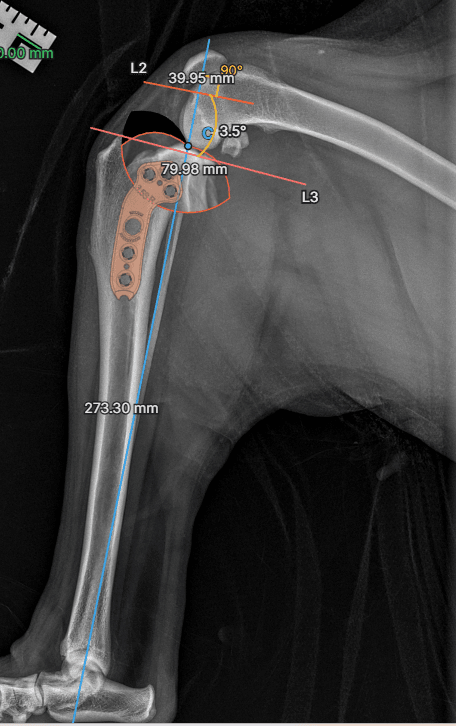
How to Plan a TPLO: Step-by-Step Preoperative Planning
Step-by-step TPLO preoperative planning: radiograph, calibration, TPA landmarks, saw blade and osteotomy, rotation distance, plate templating, and export.
All guides
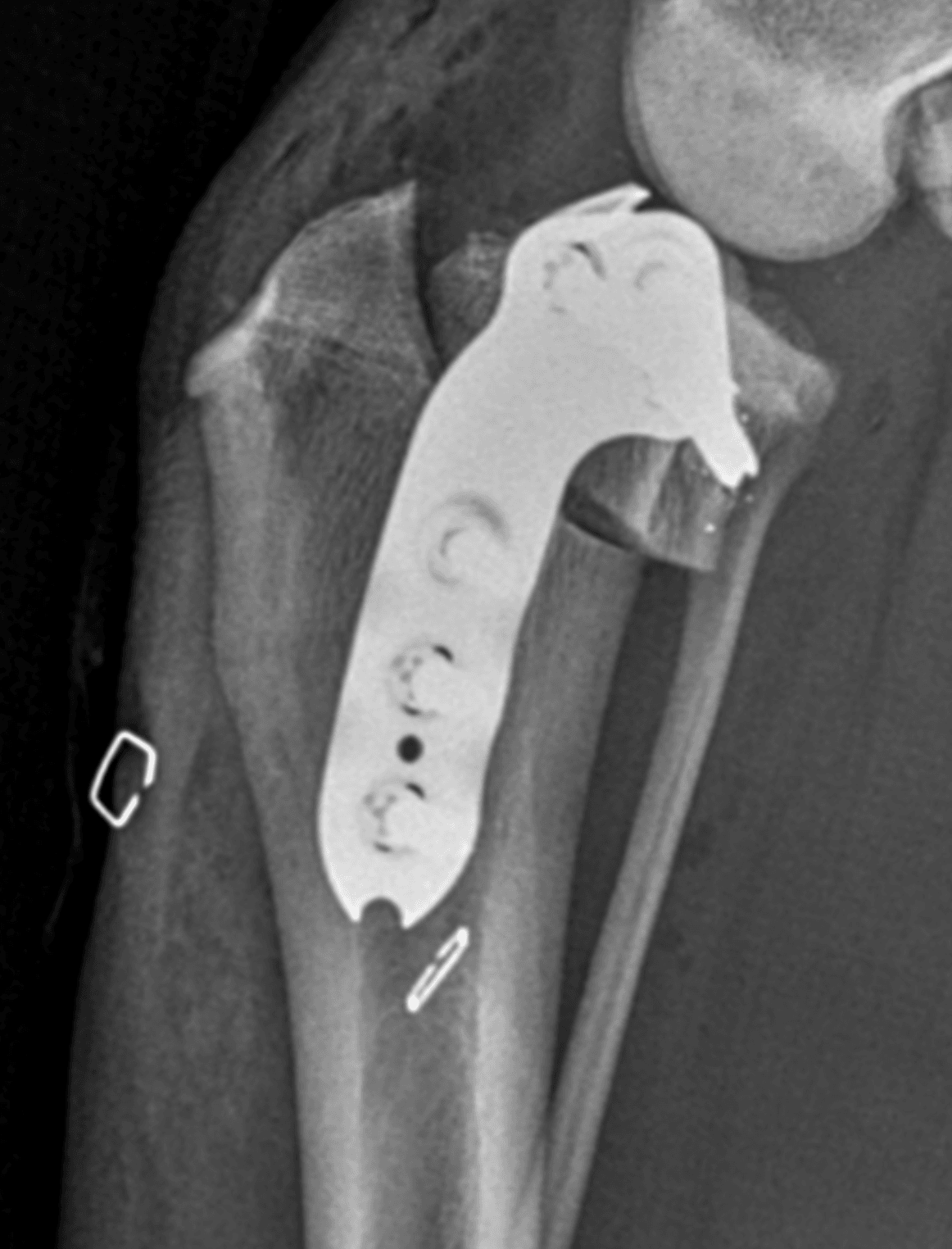
What is TPLO surgery?
How TPLO surgery works: cranial cruciate ligament disease, tibial thrust, the tibial plateau angle, the osteotomy and plate, recovery, and complications.
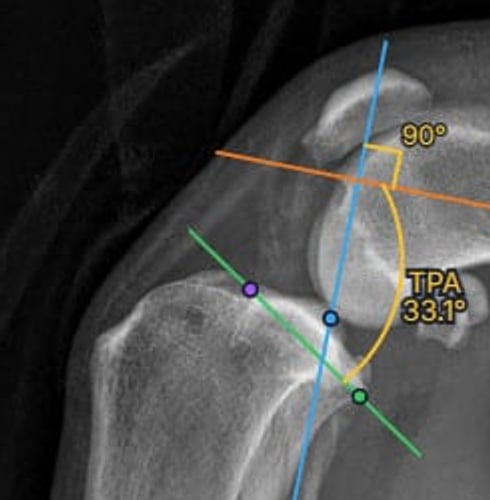
Tibial plateau angle (TPA)
What the tibial plateau angle is, the four landmarks used to measure it, typical TPA values in dogs, target post-op TPA, and sources of measurement error.
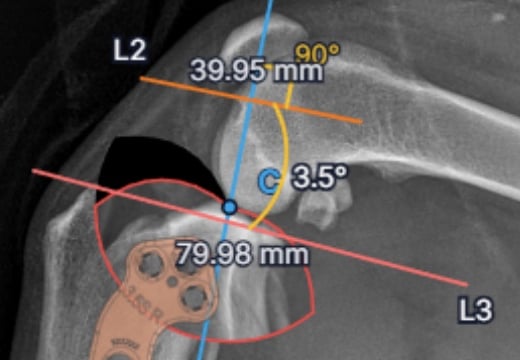
Planning to 0.1 mm precision
How to plan a TPLO to 0.1 mm: calibration, landmark geometry, true-size saw cuts, live rotation with arc length, plate templates, and what limits accuracy.
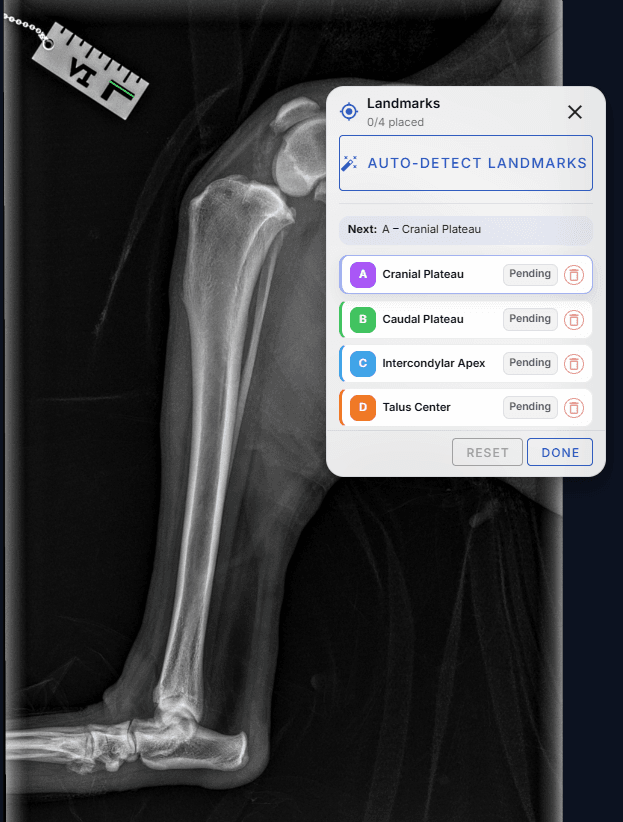
AI in TPLO planning
Can AI plan a TPLO? What automated landmark detection and TPA measurement achieve today, what the research shows, and why surgeon verification still matters.
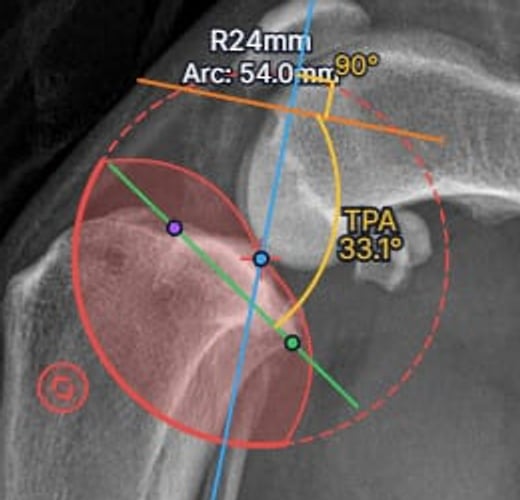
TPLO rotation and saw blade selection
How to choose a TPLO saw blade radius, position the osteotomy, and calculate rotation distance, with the formula, a worked example, and a rotation table.
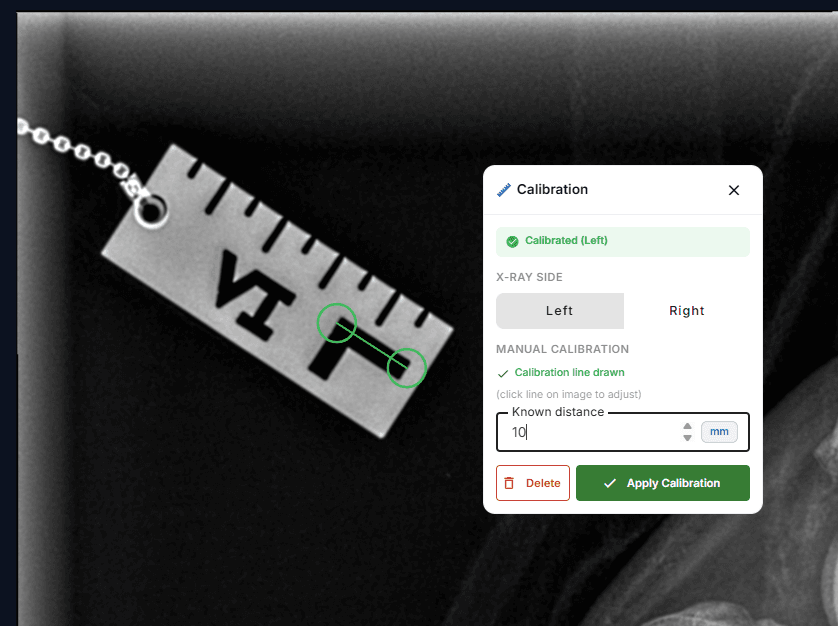
Radiograph positioning and calibration
How to position and calibrate radiographs for TPLO planning: the true lateral view, calibration markers, magnification, and the limits of DICOM pixel spacing.
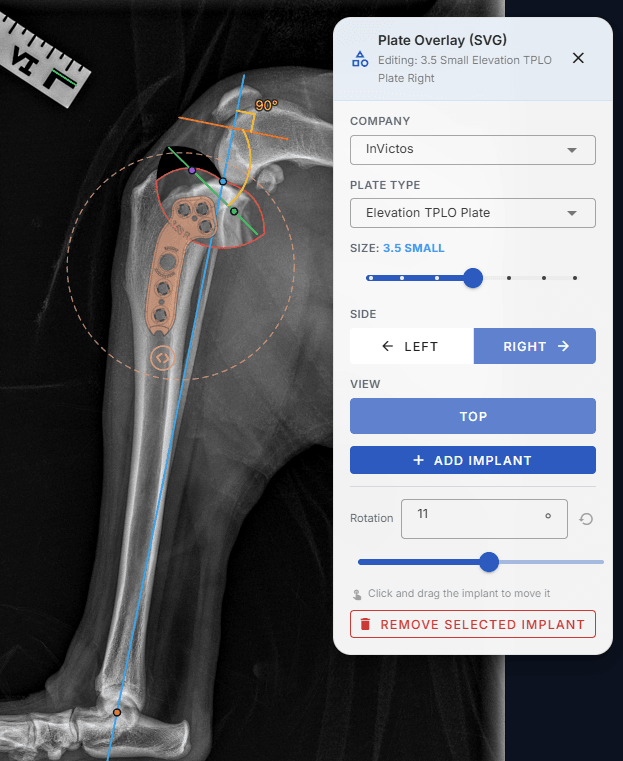
Choosing and templating a TPLO plate
How to choose and template a TPLO plate before surgery: proximal segment fit, screw position, joint and osteotomy clearance, and true-size digital templates.
For educational and planning support only. Surgeon judgment governs all clinical decisions.